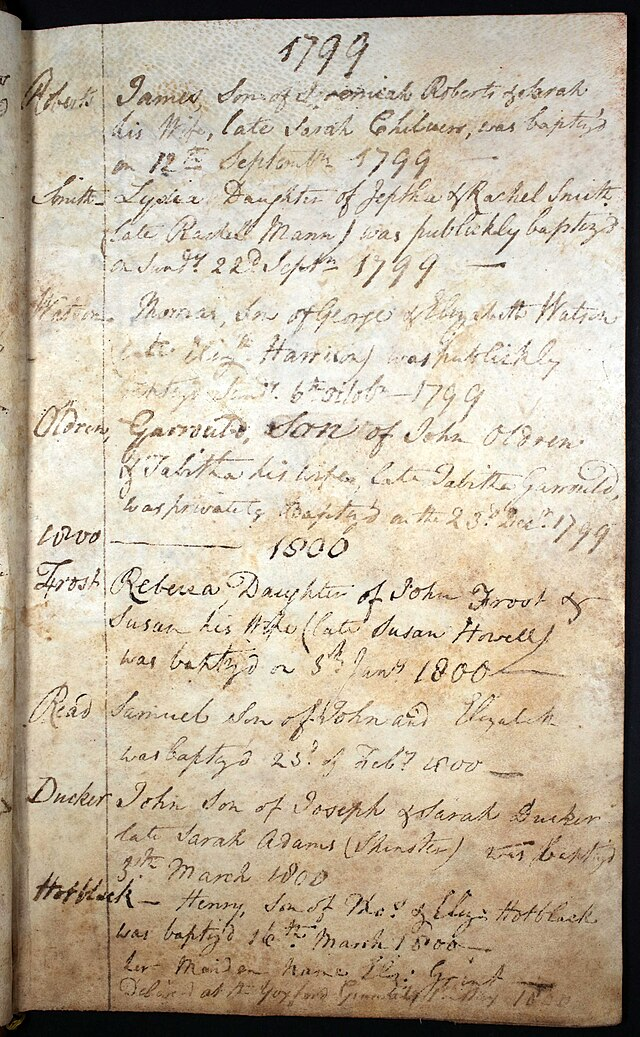
Garrould Oldren (1799-1883) baptism in Wissett, Suffolk on 23 December 1799.jpg
Via Wikimedia Commons
Modern DNA techniques can now definitively solve questions of paternity, and can even resolve cases from several generations back in the past. But traditionally, there have been many other ways in which family historians could potentially discover who the daddy was when no father’s name appeared on birth certificates. Whilst these methods can never be as accurate as DNA testing, they can produce answers and in addition, tell us a great deal about how illegitimacy was viewed and dealt with in the past.
In the years before Civil Registration of births (England and Wales, 1837; Scotland, 1855; Ireland, 1864), and sometimes afterwards, some unwed mothers were willing to confess the name of their baby’s father to the vicar of the parish at the time when the child was baptised. This might have been days, weeks, months or even years after the child was born. On other occasions, the vicar might himself have added the name of the suspected father to the record of baptism if it was known to him. Search for parish records of baptism at any of the main commercial genealogy sites.
Family History Research Services.
Discover more from searchmyancestry - Ruth A. Symes
Subscribe to get the latest posts sent to your email.


_baptism_in_Wissett,_Suffolk_on_23_December_1799.jpg)
Leave a Reply