Hello all,
Over the end of the holiday period, I was lucky enough to read a couple of great non-fiction books that you fellow family historians might find inspiring. Reading other people’s accounts of their families can help you think about your own family history research in new and unexpected ways.
On Chapel Sands: My Mother and Other Missing Persons by Laura Cummings
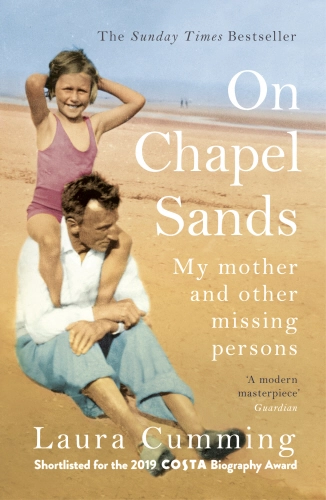
I have a bit of an obsession with stories of adoption and am, for example, an avid viewer of ITV’s Long Lost Family. I never tire of the stories despite the fact (or perhaps because of the fact) that they often follow a familiar heart-warming pattern of separation, path to discovery and eventual reunion. I purchased On Chapel Sands: My Mother and Other Missing Persons on a whim to read on holiday hoping for a similarly satisfying narrative arc: in fact I was delighted to discover something much better – an adoption story with an unexpected twist. No spoilers here!
Cumming’s mother, who had been adopted as a three-year old in the 1920s, was abducted from a Lincolnshire beach and then returned to her adoptive family a few days later. Knowing that her mother had no memory either of her original family or of this significant episode, Cummings set out to find out exactly what had happened. The book is beautifully written with the narrative interspersed with Cumming’s mother’s own reminiscences of her early years and perceptive descriptions of family photographs and landscape paintings of the areas described (Cumming is the art critic of The Observer).
Top Family History Tip: From this book (amongst many other wonderful things), you will learn something about how to interpret family photographs by understanding more about who took them, with what equipment, with what purpose, what the stance of the subjects might reveal, how they were labelled, to whom they were sent, how they were arranged and stored etc…..
Educated by Tara Westover
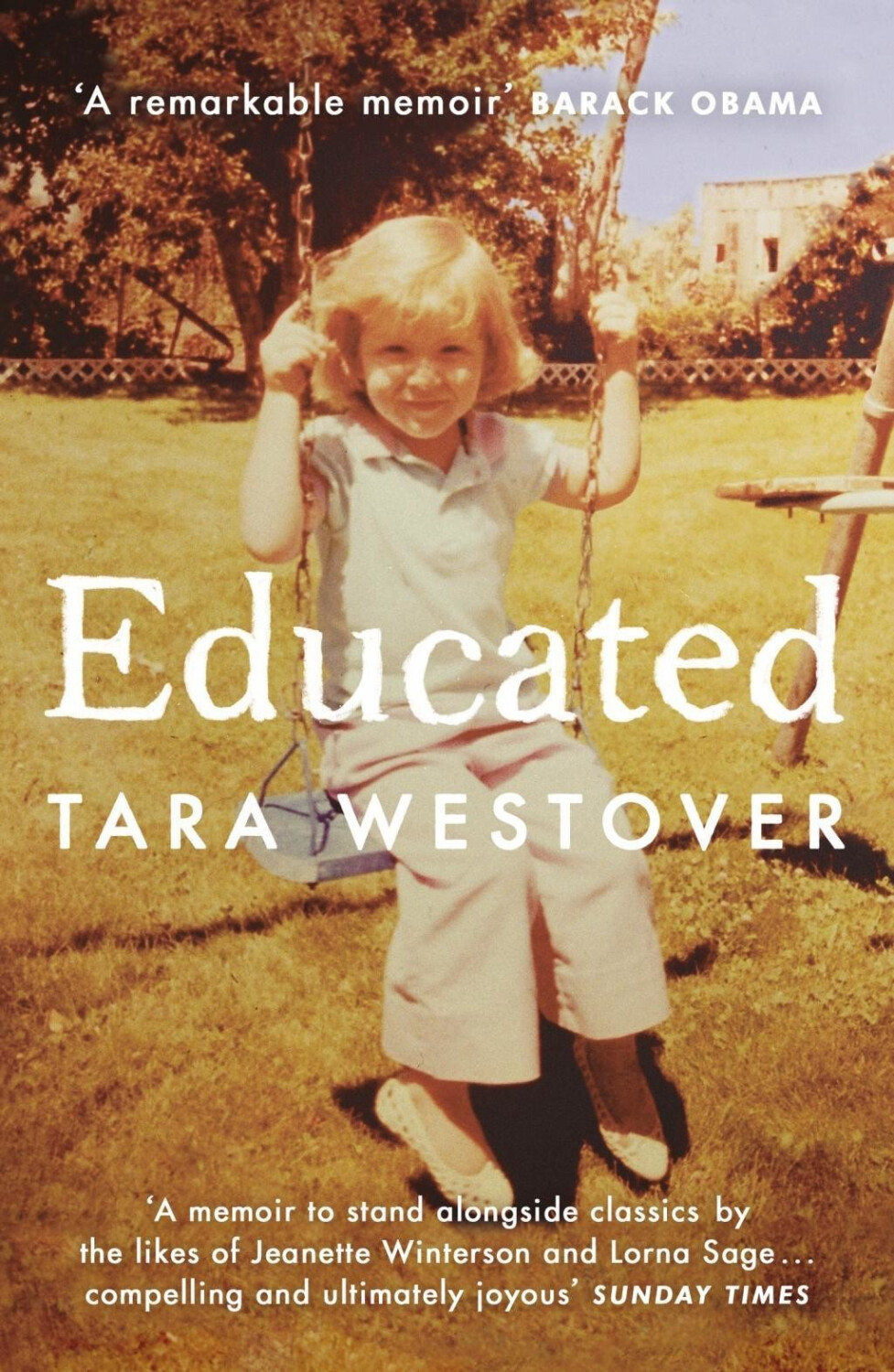
Born to a Mormon family in Idaho, Tara Westover recalls her childhood experiences as the youngest of seven children. With her parents adamantly opposed to state medicine and public education, Westover grew up in the physically demanding and highly stressful environment of her father’s scrapyard where she was in constant danger of injury. She was also physically and verbally tormented from an early age by one of her older brothers. Against this unseemly background, Westover was nominally home-schooled by her mother, whose main occupation was creating a homeopathic medicine business in her home kitchen. Westover claims to have learnt little until her late teens when against the odds, she found a path to university and eventually completed a Phd in Cambridge.
After reading this incredibly vivid and persuasive account, I was astounded to learn that Westover’s mother has written a rejoinder to her daughter’s autobiography entitled ‘Educating’ by LaRee Westover. This book is designed to refute Westover’s claims that she wasn’t properly educated at home. It also defends Westover’s sibling from the claims that he was abusive towards her. There has been great speculation about whose account is the more genuine one: the daughter or the mother.
Top Family History Tip From this book, you will learn that family history accounts can be very subjective and need to be treated with care if you are reading them to establish facts. Think about the viewpoint and the gaps in the story. Whose interests have been served by telling a family history story in this particular way?
Happy and instructive reading !
Ruth
Family History Research Services.
Websites Useful For UK Family History
Magazines
Discover Your Ancestors (online periodical): https://discoveryourancestors.co.uk/
Who Do You Think You Are? Magazine: https://www.family-tree.co.uk/
Family Tree Magazine UK : https://www.family-tree.co.uk/
Commercial Genealogy Sites
Find My Past: https://www.findmypast.co.uk/
The Genealogist: https://www.thegenealogist.co.uk/
Ancestry UK: https://www.thegenealogist.co.uk/
Newspapers British Newspaper Archive: https://www.britishnewspaperarchive.com/
Discover more from searchmyancestry - Ruth A. Symes
Subscribe to get the latest posts sent to your email.


Hi Ruth Thank you for your information about the books I’ve just finished “
LikeLike