Ruth A. Symes
[A version of this article was first published in Who Do You Think You Are Magazine in 2015]
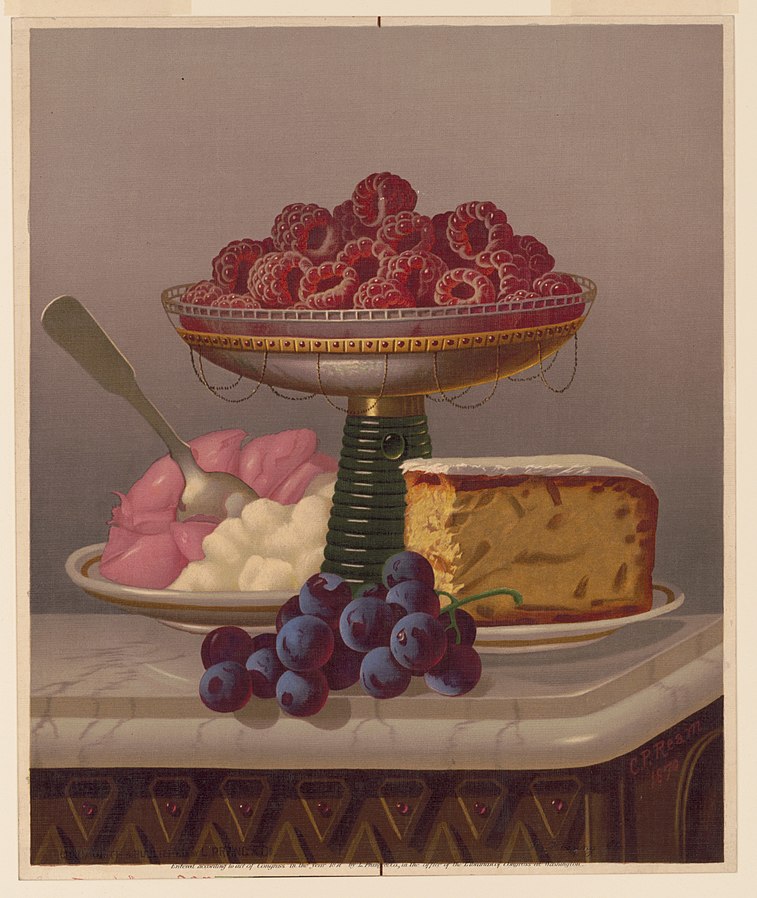
A Victorian footed compote dish with raspberries, a dish of ice cream, and a piece of pound cake placed on a table. Reproduction of a painting by the artist Cadurcis Plantagenet Ream. Via Wikimedia Commons.
Next Tuesday (September 22nd, 2026) a new group of contestants (with the charming addition of Nigella Lawson!) will once more take on the battle to master the subtleties of bread, cake and pastry making in a marquee set in the heart of the British countryside. This will be the 17th series of Bake Off : it seems that the British appetite for cake and the stories around cake never dwindles. One of the great joys of watching this weekly feast over the years has been the constant reminder of ingredients, recipes and cooking methods from the past. Food and family history in particular is a compelling combination. But what can cakes, biscuits, puddings and buns really tell us about the lives of our families in the past?
Surprisingly enough, baking within individual homes in Britain is something of a recent historical development. Coal-fired ovens (as part of kitchen ranges) were available from the early 1800s but tended to be affordable only by the upper and middle classes. Up until the mid-nineteenth century, domestic cooking facilities for poorer people (in both towns and countryside alike) consisted simply of an open grate with an iron pot suspended above it – there was simply no provision for baking. Traditionally, in many parts of Britain, bread and cakes were often prepared at home and taken to a communal bakery to be cooked, later such fare was simply bought ready-made from commercial bakeries. It was not until the 1850s that it became common for new working-class homes to be fitted with ranges which included a small oven. At this point, our ordinary ancestors were at last able to complete the whole baking process with their own hands in their own homes.
It’s also worth bearing in mind that the kinds of baking enjoyed by our recent ancestors only became possible after three other mid-nineteenth-century developments: the replacement of grind stones in flour mills with metal or porcelain rollers (enabling white flour to be made more cheaply and quickly); the invention of baking powder; and the increasing availability of sugar. All these developments (though begun earlier) were well established and benefitting the ordinary consumer by 1870. Thus, as well as the heavy breads and fruit cakes of earlier centuries, the late Victorian era was able to boast lighter cakes made with refined white flour, sugar and icing sugar – ingredients that progressively became available to more and more members of the population.
Gas ovens were patented as early as 1820, but it was not until the laying of plentiful gas lines in the 1920s that gas ovens with top burners and interior ovens were commonly found in ordinary homes. Similarly, electric ovens, though invented in the last two decades of the 19th century, were not common until the improvements in electricity distribution of the late 1920s and 1930s. With these developments and the increasing affordability of ‘luxury’ ingredients, our early twentieth-century ancestors baked considerably more fare and did so more imaginatively than earlier generations. And by the 1950s, with many women still confined to the domestic environment but seeking to bring a little culinary magic to it, British baking was enjoying its glorious heyday!
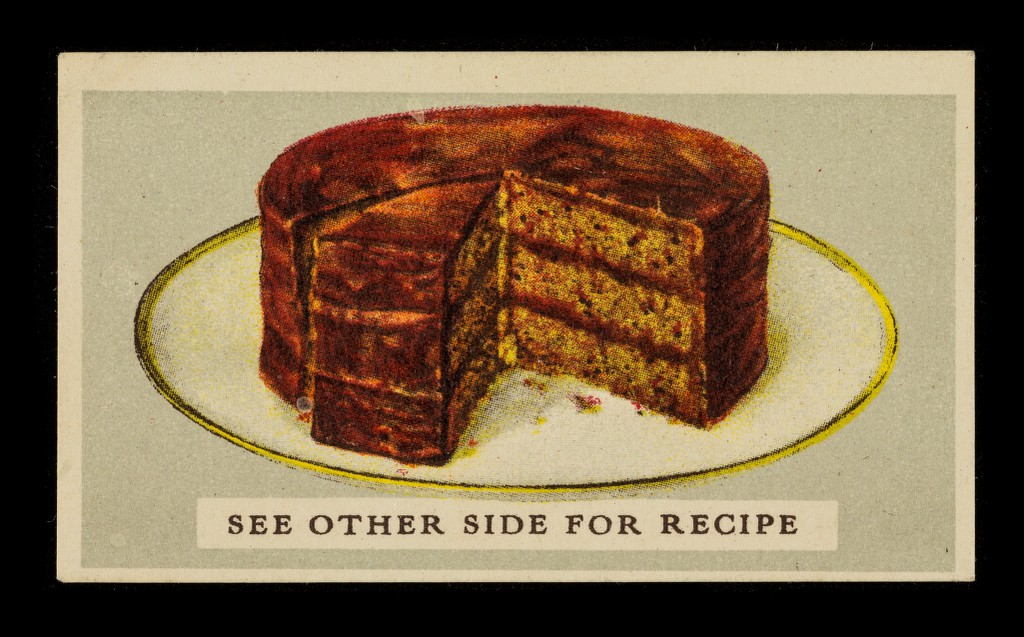
Small card giving a recipe for chocolate cake (possibly given away with packs of Royal Baking Powder). New York : Royal Baking Powder Co., [between 1910 and 1919?] via Wellcome Institute.
A good starting point when thinking about baking and family history, is to take a close look at those festive items traditionally baked in your family at times of celebration. On these special occasions, tried-and-tested recipes (rather than new-fangled experimental ones) were used over and over again down the generations. You can find out more about any of these in the large number of books devoted to the origins of recipes (see list below) or on the internet (sometimes simply by tapping in a list of ingredients, even if you have no recipe title). It is these familiar ‘old favourite’ recipes that can best tell us something about our ancestors. Surprisingly enough , tarts, pies and cakes can help us find out where they might have originated, their economic situation, their religious attitudes and even their relationship with drink!
Festive cakes have always marked the most joyous moments in family history namely christenings, birthdays, and weddings, as well as Holy Communion, Barmitzvahs and a whole host of other religious festivals. The recipes for such cakes might well have been retained in the collective family memory; the cakes themselves will perhaps appear in photographs taken to mark these special events.
British wedding cakes from the Victorian period onwards were simple fruit-filled cakes decorated with white icing – and probably much the same up and down the country. But different regions had different traditions about when the cake should be baked (in Scotland it was done at the time of the engagement); who should cut the cake, who should share it out, and whether or not a ring should be placed inside. Be alert also to some wedding cake recipes that may have been the legacy of immigrant forefathers. French ancestry, for instance, may have expressed itself at the wedding breakfast in the shape of heaps of chocolate cream-filled profiteroles (the traditional ‘Croquembouches’); the wedding cakes of Italian immigrants were traditionally large one-layered sponge cakes made with Chantilly cream and covered in whipped cream, and so on. Birthday cakes from the late Victorian period were probably less region-specific, borrowing the paraphernalia of coloured icing, decorations, candles and even the idea of having names, dates and greetings written upon them from America.
And baking has always marked sad family occasions as well as happy ones. At funerals, particularly in the North of England, so called ‘arval bread’ or ‘arval cake’ was eaten [‘arval’ in Old Norse = succession ale]. This was a thin, sweet, light cake (often more of a loaf since the tradition long pre-dates the introduction of baking powder) containing fruit (currants and raisins) and spice (nutmeg or cinnamon). Recipes differed from region to region and might be worth tracing on the internet if still practised by your family. Often, the upper surface of the loaf would be scored or decorated with a cross, to denote its religious significance. There were also secular and legal associations to the eating of arval cake. Traditionally, ingesting a piece symbolically freed the heirs of an estate from any pending fines imposed by the Lords of the Manor and symbolised an agreement that the deceased had died fairly and without violence.
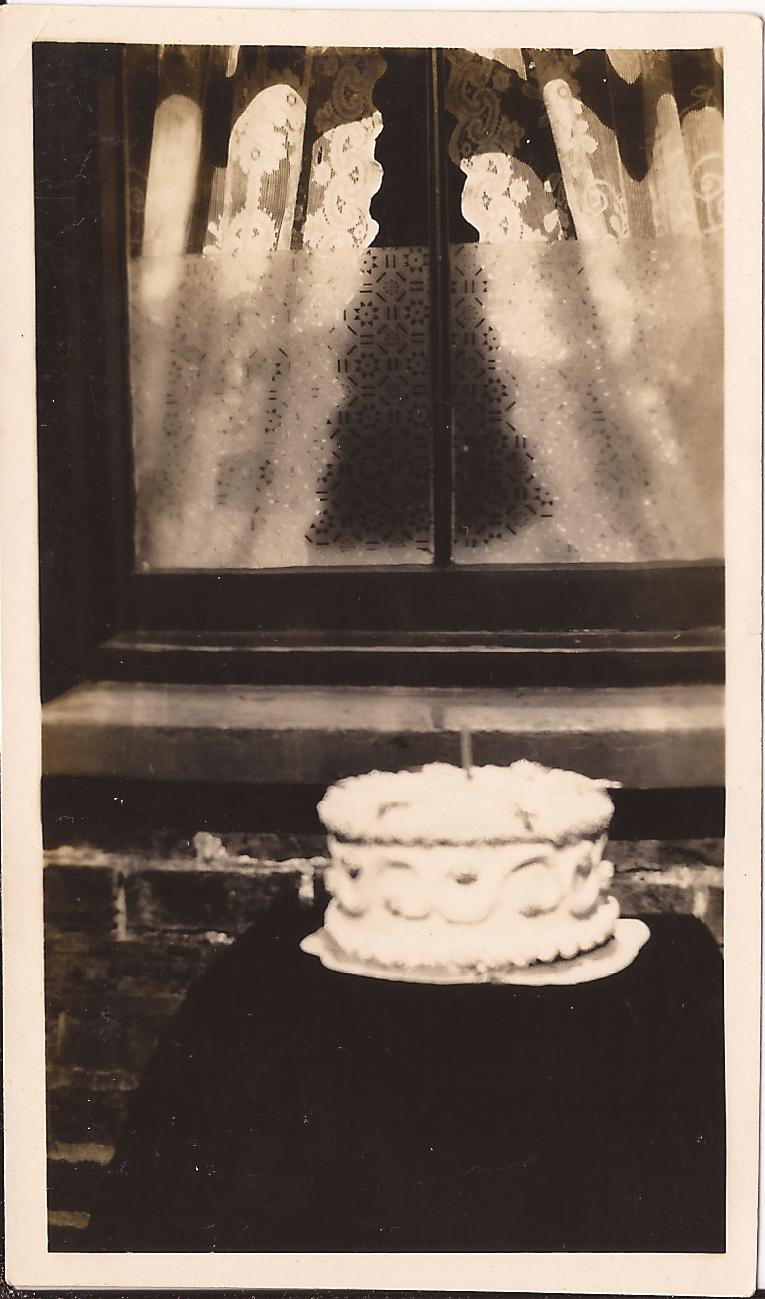
This birthday cake was made to celebrate a first birthday in Liverpool in 1929. Other family photographs attest to the fact that this rather dismal window ledge and corner of the backyard were the location of many family festivities over the years. The Writer’s own collection.
Certain times of year too were traditionally marked by special kinds of baking, from items enjoyed only in certain communities such as ‘Shooting Cake’ served in some rural areas on the Glorious Twelfth (12th August start of the grouse shooting season), to the more common array of cakes, puddings, yule logs and biscuits savoured all over the country at Christmas. A Twelfth Night Cake made from fruit and spices was traditionally eaten on January 5th and was surrounded by ritual. In observant Christian households, Easter brought Simnel cakes – light fruit cakes, similar to Christmas cakes, covered in marzipan and decorated with marzipan balls to represent the eleven true disciples of Jesus (minus Judas Iscariot). Sometimes Christ was also represented, by a ball placed at the centre. Your family may have made Simnel cakes to different recipes depending on which part of the country they came from. Three particular types were from Bury, Devizes and Shrewsbury (the last being the one which became most popular throughout the country).
Family Cookery Books
Family historians often report finding cookery books amongst family papers – but dismiss them as insignificant in their quest for ‘hard’ information about their ancestors’ lives. It is true that you come across a published cookbook owned by an ancestor (e.g. Mrs Beeton’s famous Book of Household Management (first edition, 1861)) you should perhaps treat it with caution as evidence of what your ancestor ate. Published books probably tell you more about how your ancestors aspired to bake rather than what they actually baked. But handwritten recipes, on the other hand, are probably a fairly accurate record of what actually appeared on your ancestors’ plates.
The presence of a cook book of any sort amongst inherited records suggests that your family in the past had a certain level of literacy and income. Look out for those pages that are the most well-thumbed or that have been annotated by hand. Memoranda written down the side of recipes may tell you how different generations of mothers and daughters adapted dishes to suit their own tastes, budgets and family size. Remember also that many recipes in poor illiterate households were, of course, passed down solely by word of mouth.
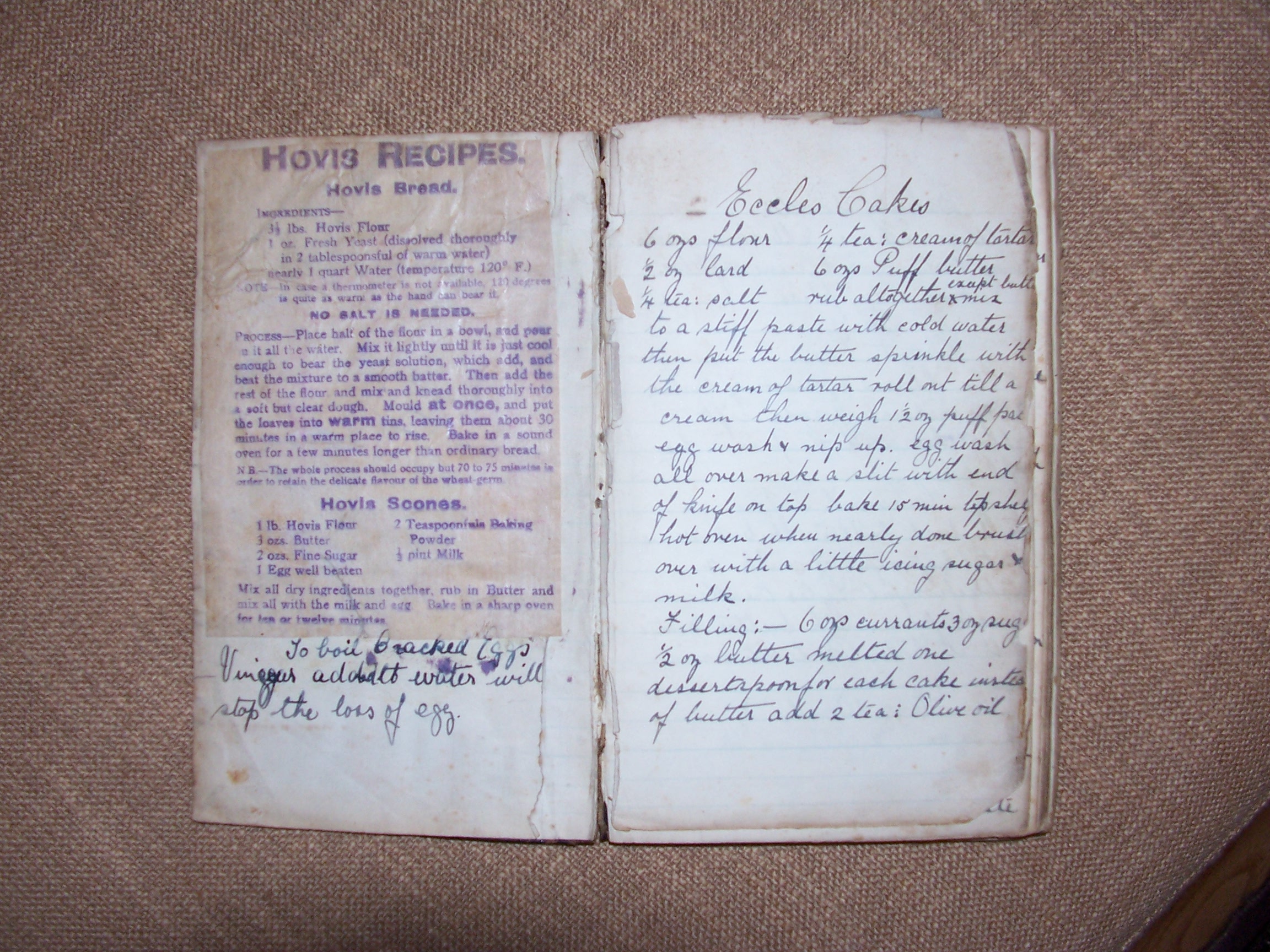
A recipe for Eccles cakes in a handwritten family cookery book from the early twentieth century. These cakes, made with shiny topped flaky pastry and filled with dried fruits, sugar and spice, were first commercially made and sold in 1793 by James Birch in his baker’s shop in Eccles (now part of the Metropolitan Borough of Salford). The recipe for Eccles cakes was probably based on one for ‘sweet patties’ by the well-known cookery writer Mrs Elizabth Raffald published in 1769. Credit: With thanks to Mr Tim New
Baking recipes may bring the festive spirit of your ancestors but if scrutinised carefully they may also be a reminder of the economic spirit of the times in which they lived. Cakes and biscuits made during the Second World War, for example, often show evidence of rationing – lesser amounts of sugar, eggs and fat are required than in both earlier and later recipes. Many recipes from this time are also quick to execute – an indication perhaps of the fact that with the men away more women were going out to work and had less time to devote to the pleasurable domestic tasks such as baking.
Another time-sensitive aspect of baking to look out for is the presence or absence of alcohol in a family recipe. An inherited recipe for Christmas pudding laced with rum might indicate both the prosperity of ancestors and their liberal ideas regarding alcohol consumption. If your Christmas pudding has always been made without brandy it may be a throwback to ancestors who were temperate!
Actually baking a family recipe can give you an instant connection with the daily domestic life of previous generations. Very often, the ‘best’ recipes for scones or birthday cakes in a family were attributed to one or other aunt or grandmother to the extent that the baking came somehow come to stand in for the very presence of those female relations long after their deaths. Some family recipes were even named after the person best remembered for concocting them: ‘Grandma Bentley’s buns’ or ‘Mrs Marsden’s’ Fruit Cake, for example. Indeed, one of the most appealing aspects of family recipes is that they provide a startlingly sensuous link with the women of the past – family members who may have left no other written record or tangible evidence of their time on earth.
Baking from the British Regions and Beyond
Ancestors who moved from one part of the country to another, or indeed who migrated to Britain from other countries, very often took their eating habits with them and the passing of recipes down through the family became an important method of preserving traditional heritage. Your family story might be evident not only in the actual foods eaten by your ancestors and yourselves but in the cooking methods adopted or even in the etiquette surrounding how particular items were eaten. In Yorkshire, for example, Christmas cake was often eaten with an accompaniment of cheese.
The different regions of Britain have historically produced baking that resounds with the character of that part of the country and the natural produce available in it. In the nineteenth and early twentieth centuries, for example, traditional baking from the Midlands was heavy and hearty, suitable fare for those working in the manual industries based there. Typical fare included: Melton Mowbray pork pie, gingerbread, Bramley apple pie, oatcakes, plum bread and Bakewell tart.
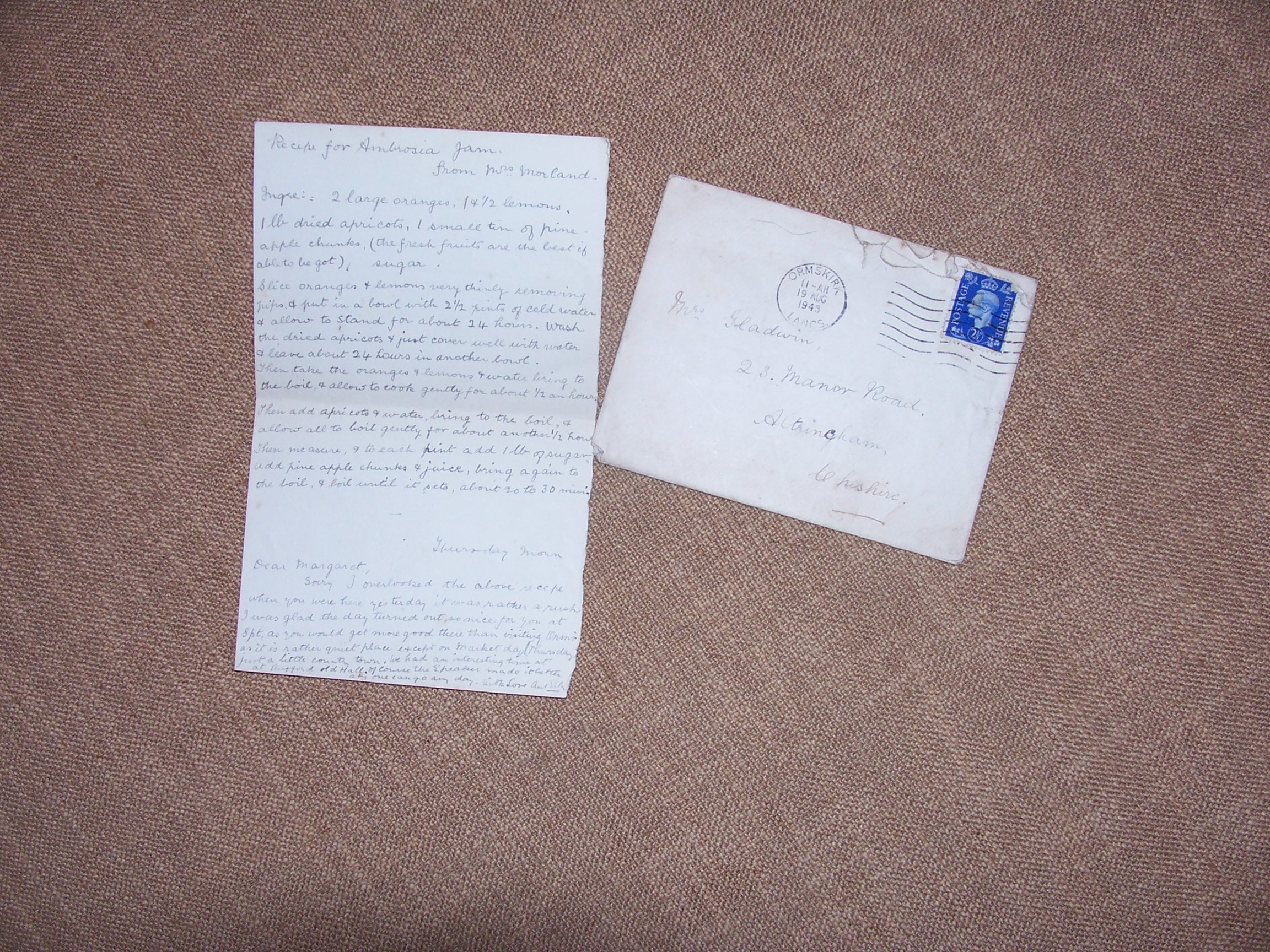
Baking was the subject of much ordinary correspondence between women. Here is a letter posted just as the Second World War was ending in 1945 to a ‘Mrs Gladwin’. The recipe, for Ambrosia Jam, comes from a ‘Mrs Morland’ who may or may not be the writer of the letter. With thanks to Mr Tim New
Scottish ancestors who moved away from their place of birth may have taken with them a passion for Tablet (a concoction of sugar, condensed milk and butter similar to fudge), or Cranachan ( a dessert of whipped cream, whisky, honey, oatmeal and raspberries – assembled individually by guests at the table). Welsh migrants might have taken Anglesey Cake, Bara Brith, Welsh Cheesecake, Cinnamon Cake, Dripping Cake, Welsh Pudding or Crempog ( a kind of pancake). The Irish who settled in other parts of Britain took with them Kerry cake (made with lemon rind and diced apples) or Barmbrack (a yeasted bread with sultanas and raisins).
And a family history that includes ancestors from other cultures and countries might also be strongly marked by an inherited baking cuisine. Many German immigrants of the late eighteenth and early nineteenth century in fact settled in East London and worked as ‘sugar bakers’ bringing with them, amongst other delights, strudel – a long roll of a cake made with high-gluten flour and filled with raisins, cherries and almonds or spinach and sauerkraut. Meditteranean migrants brought methods of making flatbreads like pitta, focaccia, and lavash, raised breads such as French Bacon Bread, Greek Spinach Bread, Olive Bread, Italian Nut Breads, and savouries, such as calzones, empanadas, pizzas, and spanakopitta. Jewish ancestors from Eastern Europe may have passed down the secrets of mondel bread, cheese bread, apple cake, sour cream coffee (or pound) cake, hamantaschen, (a cake to celebrate the Jewish holiday of Purim), and honey cake.
All in all, rather than feel guilty when we consume the particularly pleasurable combination of fats, sugars and flour in a celebratory cake or homemade biscuit, we should perhaps instead remember that baking for others and sharing the baking of others is one of the most basic and yet powerful ways of connecting with those who have gone before. If you do come across family papers which include recipes, why not have a go at sourcing the ingredients and trying out some of the baking? There is nothing quite like the excitement of taking your first mouthful of cake from a recipe once baked by your great-grandmother and imagining how those same tastes must often have given sustenance and pleasure to earlier generations of your family. And there is surely no more satisfying way to pass on a sense of family history to the younger generations than through the simple pleasure of cakes!
Personal File: Mrs Elizabeth Raffald (1733-1781)
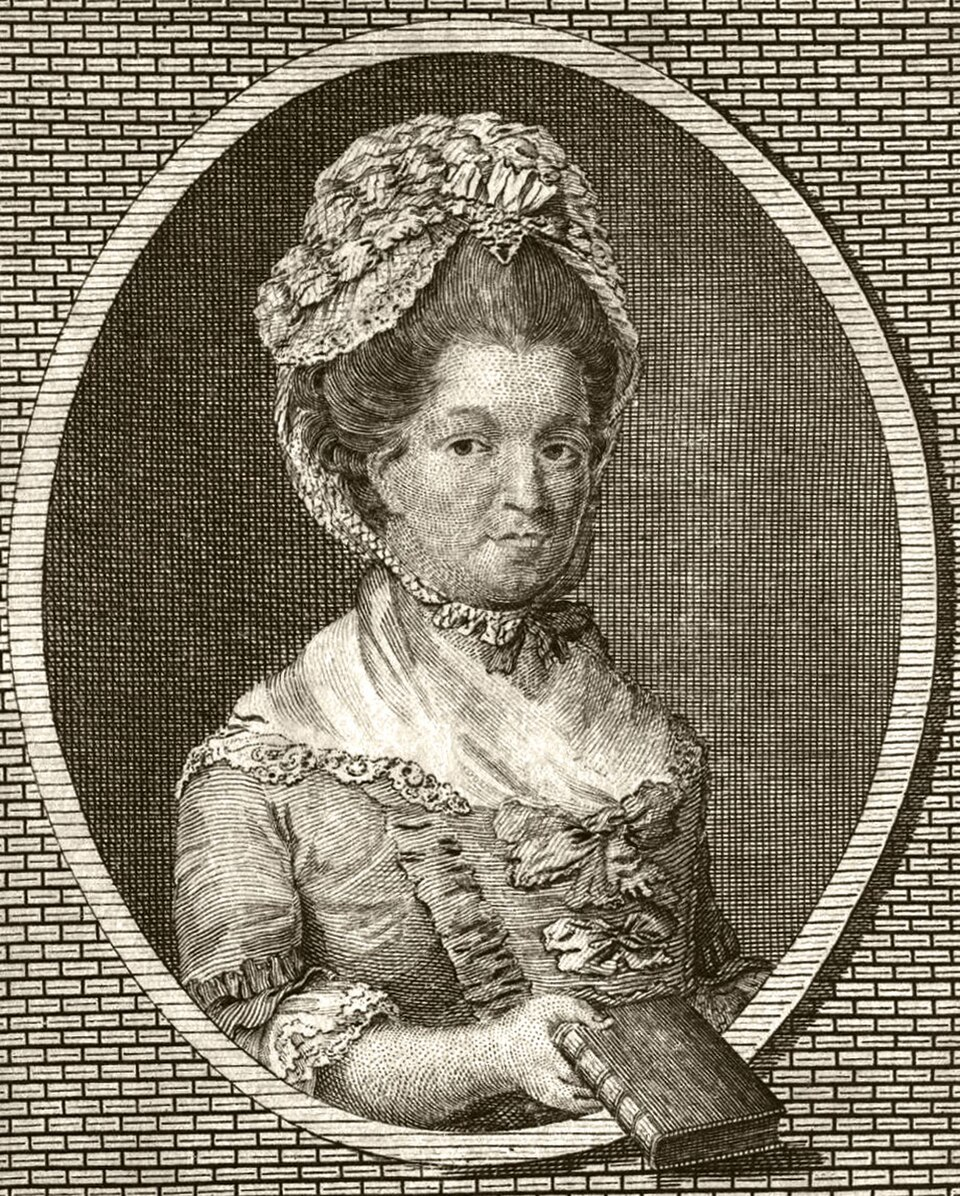
Elizabeth Raffald (1733-1781). From the 1782 edition of The Experienced English Housekeeper published by Baldwin Via Wikimedia Commons
An early advocate of the joys of baking was Yorkshirewoman Mrs Elizabeth Raffald, who went into service at an early age and eventually became housekeeper at Arley Hall, Cheshire. Here her duties included organising the cuisine and taking charge of the domestic servants. Boosted by her marriage to John Raffald, gardener at the hall, and by her friendship with its mistress, Lady Elizabeth Warburton, Elizabeth left service to move to Manchester. Here she showed prodigious energy, starting a family (accounts differ as to whether she had nine or 16 daughters!), writing a cookery book, running a cookery school and opening both a coffee and a ‘confectionery’ shop.
The Experienced English Housekeeper: For the Use and Ease of Ladies, Housekeepers, Cooks and Co (published in 1769) boasted that it included 800 recipes most of which had never before appeared in print. This was a claim which the later, better-known cookery writer Mrs Beeton (1836-1865) – recently revealed to have been an outrageous plagiarist who probably never even made most of her recipes – could never have made. Mrs Raffald’s second shop, dedicated entirely to confectionery advertised some of its fare as ‘cream possets, jellies, flummery and lemon cheese cakes’. From here,she also made bespoke ‘bride and christening cakes’ for those who could afford them. Only 48 when she died, Mrs Raffald had significantly helped to shape the palate for puddings of both Manchester’s rising industrial elite and the British middle classes more generally.
Baking Words
In addition to cookery books, the language used by your family to describe baked items might provide clues to their background. Perhaps the best example of this lies with the humble bread roll. Ancestors from Lancashire and Liverpool might have used the term ‘barm’ or ‘barm cake’, those from Yorkshire will have referred to ‘breadcakes’, and those from the Midlands might have spoken of ‘cobs’. In the Northern town of Bolton specifically a bread roll was a ‘flour cake; ’on the Wirral and in Coventry it was a ‘batch.’ and in Rochdale, Bury, Oldham and Ashton –Under–Lyne it was a ‘muffin.’ To your forefathers from Waterford Ireland, bread rolls were ‘Blaas,’Scots ancestors from Aberdeen would have called them ‘butteries’ and Geordies always used the term ‘stottie cakes. No doubt the list could go on and on!
Tale of a Scone
The humble scone is a good example of British baking that might tell you something about your family in the past. Scones tend to be made from family recipes passed down from mother to daughter rather than from published cookery books.
A particularly attractive name for a regional scone recipe is the ‘Singing Hinny’ which comes from the North-East. The story goes that a mother was making these rather fatty scones (which include lard, butter and cream) and throwing the dough into a hot pan. When asked by her children what the noise was, she replied, ‘They’re singing, hinnies’ (using the North-East term of endearment for little children).
If you make your scones with potato flour, consider the fact that this may link back to a family connection with Scotland or Northern Ireland. Such scones are known as ‘soda scones’, ‘potato scones’, ‘soda farls’ or even ‘tattie scones’. Traditionally they were eaten as part of a Scottish breakfast or Ulster fry. The Welsh equivalent are Welsh cakes. Yorkshire has Fat Rascals, and Quickbread. So called shortcake and bannocks came from Scotland.
Another clue to where your scone recipe originated may lie in the method of cooking. The Scots ‘girdle’ scone was fried on a griddle rather than baked. The dropped or drop scone was named after the method of dropping the batter onto the griddle or frying pan to cook it.
On the whole, British scones are usually lightly sweetened and may contain raisins, currants, dates, sultanas, peel or glace cherries. If your family scones tend to be savoury rather than sweet (topped with cheese, bacon or onion), consider the fact that the recipe might have originated outside Britain.
Useful books
Julie Duff, Cakes from Around the World, Grub Street, 2009
David J Eveleigh, Firegrates and Kitchen Ranges, Shire, 2004
Anissa Helou, Savory [sic] Baking from the Meditteranean, HarperCollins 2007
S. Hinwel Tibbott, Baking in Wales, National Museum and Galleries of Wales, 1991
Stanley Ginsberg and Norman Berg, Inside the Jewish Bakery: Recipes from the Golden Age of Jewish Baking, Camino Books, 2011
Ruth Ross, The Irish Kitchen: Irish breads and Baking, Gill and Macmillan Ltd, 2007
Mabey, David. Traditional Eating and Drinking in Britain, A Feast of Regional Foods. Macdonald and James, 1978.
Richardson, Paul. Cornucopia: A Gastronomic Tour of Britain. Abacus 2002.
Tannahill, Reay. Food in History, Eyre Methuen, 1973.
Useful Websites
http://www.cakebaker.co.uk/regional-british-baking-category.html
www.greatbritishkitchen.co.uk Looks in details at foods from different British regions.
http://www.ehow.com/how_4682043_memory-cookbook.html How to create a memory cookbook
http://www.foodtimeline.org/foodcakes.html On the history of cakes
http://blog.kathrynmcgowan.com/2009/12/14/a-brief-history-of-flour/ – On the history of the milling of flour
www.foodmuseum.com Food history, news, features and temporary exhibits.
www.greatbritishkitchen.co.uk Sections on regional cooking and eating history.Celebratory Baking
Family History Research Services
Discover more from searchmyancestry - Ruth A. Symes
Subscribe to get the latest posts sent to your email.
 searchmyancestry - Ruth A. Symes
Leave a comment